
Educational Studies
Explore the life of Jesus Christ and the love of God, and be inspired to live a life filled with the fruit of the Spirit.
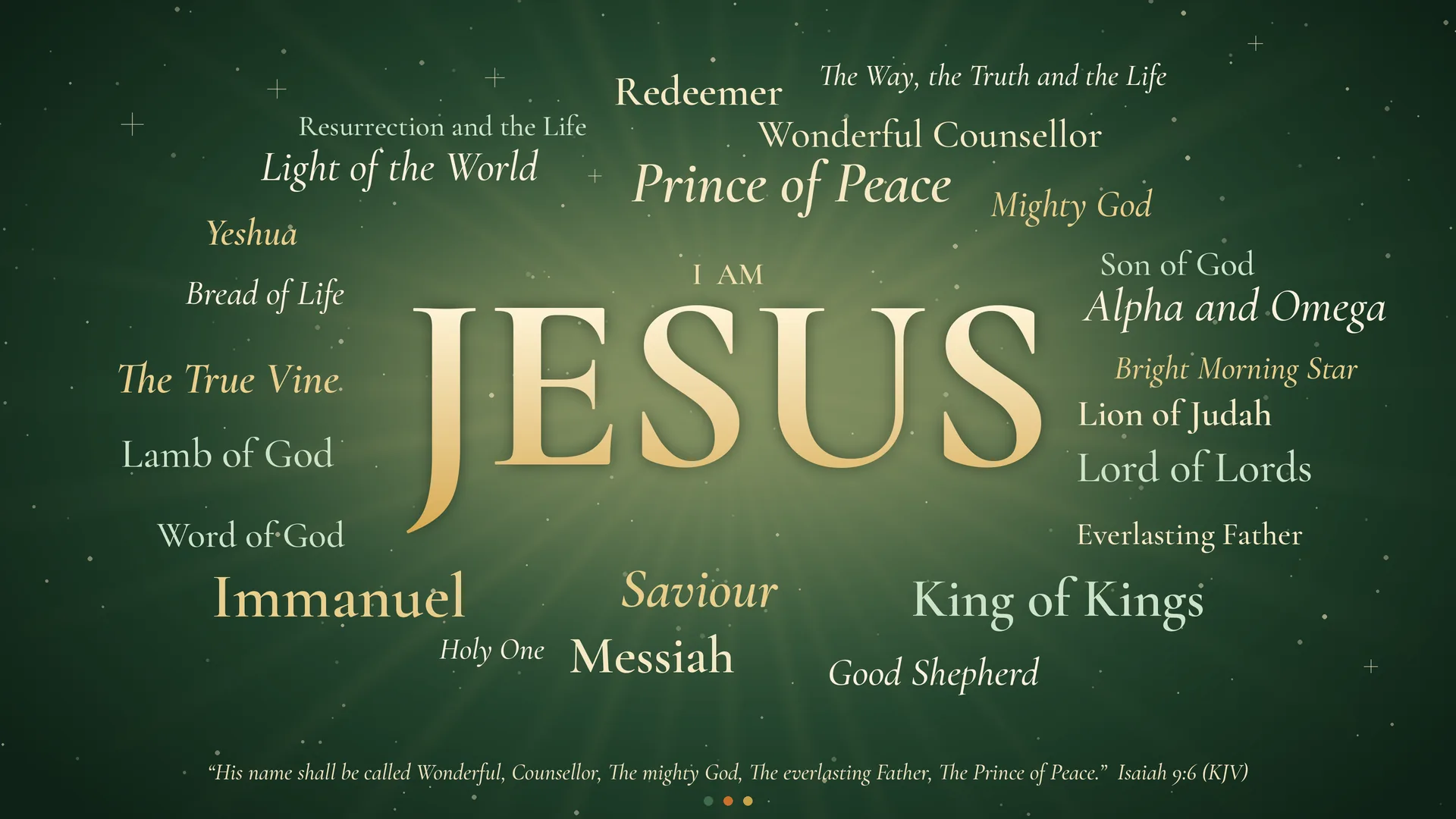
Yeshua studies
Yeshua - His Laws (KJV)
Yeshua HaMashiach – His Laws
The commands of the Lord Jesus Christ · All Scripture quoted from the King James Version (KJV)
Yeshua HaMashiach is Hebrew for “Jesus the Messiah”. Jesus gave many commands during His ministry, and four key commands run through His teaching:
- Repent
- Love and believe in the Father and the Son
- Love your neighbour as yourself
- Forgive others
These commands are not a ladder we climb to earn God’s favour. Salvation is God’s gift, received by faith. They describe how those who belong to Jesus live, out of love for Him: “If ye love me, keep my commandments” (John 14:15 (KJV, opens in a new tab)). Paul calls this “the law of Christ” (Galatians 6:2 (KJV, opens in a new tab)).
1. Repent
To repent means to change your mind and turn around: to turn away from sin and turn back to God. It is more than feeling sorry. It is a change of direction that shows itself in a changed life.
Repentance was at the heart of Jesus’ preaching from the very start. John the Baptist had prepared the way with the same message (Matthew 3:2 (KJV, opens in a new tab)), and Jesus took it up:
“From that time Jesus began to preach, and to say, Repent: for the kingdom of heaven is at hand.” (Matthew 4:17 (KJV, opens in a new tab), KJV)
Jesus took the refusal to repent seriously, even in towns that had seen His miracles:
“Then began he to upbraid the cities wherein most of his mighty works were done, because they repented not:” (Matthew 11:20 (KJV, opens in a new tab), KJV)
After His resurrection, the apostles carried the same call to repent wherever they went, and with it a wonderful promise of forgiveness and refreshing:
“Then Peter said unto them, Repent, and be baptized every one of you in the name of Jesus Christ for the remission of sins, and ye shall receive the gift of the Holy Ghost.” (Acts 2:38 (KJV, opens in a new tab), KJV)
“Repent ye therefore, and be converted, that your sins may be blotted out, when the times of refreshing shall come from the presence of the Lord;” (Acts 3:19 (KJV, opens in a new tab), KJV)
“Repent therefore of this thy wickedness, and pray God, if perhaps the thought of thine heart may be forgiven thee.” (Acts 8:22 (KJV, opens in a new tab), KJV)
“And the times of this ignorance God winked at; but now commandeth all men every where to repent:” (Acts 17:30 (KJV, opens in a new tab), KJV)
- Repentance is for everyone. Acts 17:30 (KJV, opens in a new tab) says God “commandeth all men every where to repent”. No one is too good to need it, and no one is too far gone to be welcomed back.
- Repentance brings refreshing, not only sorrow. Acts 3:19 (KJV, opens in a new tab) promises that sins will be “blotted out” and “times of refreshing” will come from the Lord.
- Repentance is ongoing. Believers keep turning back to God whenever they stray. Jesus told a church that had drifted, “Remember therefore from whence thou art fallen, and repent, and do the first works” (Revelation 2:5 (KJV, opens in a new tab)).
2. Love and Believe in the Father and the Son
When asked which commandment was the greatest, Jesus answered from Deuteronomy 6:5 (KJV, opens in a new tab):
Matthew 22:37-38 (KJV, opens in a new tab) (KJV)
37 Jesus said unto him, Thou shalt love the Lord thy God with all thy heart, and with all thy soul, and with all thy mind.
38 This is the first and great commandment.
Mark’s account adds one more word, strength. God asks for all of us: heart, soul, mind and strength.
“And thou shalt love the Lord thy God with all thy heart, and with all thy soul, and with all thy mind, and with all thy strength: this is the first commandment.” (Mark 12:30 (KJV, opens in a new tab), KJV)
To know the Son is to know the Father
Jesus taught that loving God and believing in Him cannot be separated. To see Jesus is to see the Father, and to love the Father is to love the Son He sent:
“Jesus saith unto him, Have I been so long time with you, and yet hast thou not known me, Philip? he that hath seen me hath seen the Father; and how sayest thou then, Shew us the Father?” (John 14:9 (KJV, opens in a new tab), KJV)
“Jesus said unto them, If God were your Father, ye would love me: for I proceeded forth and came from God; neither came I of myself, but he sent me.” (John 8:42 (KJV, opens in a new tab), KJV)
Faith: the work God asks of us
When people asked Jesus what works they should do to please God, His answer was simple: believe.
“Jesus answered and said unto them, This is the work of God, that ye believe on him whom he hath sent.” (John 6:29 (KJV, opens in a new tab), KJV)
“And Jesus answering saith unto them, Have faith in God.” (Mark 11:22 (KJV, opens in a new tab), KJV)
“But without faith it is impossible to please him: for he that cometh to God must believe that he is, and that he is a rewarder of them that diligently seek him.” (Hebrews 11:6 (KJV, opens in a new tab), KJV)
Unbelief, on the other hand, is the root sin. Jesus said that when the Holy Spirit came, He would show the world its sin, and the sin He named was refusing to believe in Jesus:
John 16:8-9 (KJV, opens in a new tab) (KJV)
8 And when he is come, he will reprove the world of sin, and of righteousness, and of judgment:
9 Of sin, because they believe not on me;
Love that obeys
Love for God is not only a feeling. Jesus showed His own love for the Father by obeying Him, and He calls us to abide in His love in the same way:
“As the Father hath loved me, so have I loved you: continue ye in my love. If ye keep my commandments, ye shall abide in my love; even as I have kept my Father’s commandments, and abide in his love.” (John 15:9-10 (KJV, opens in a new tab), KJV)
3. Love Your Neighbour as Yourself
Jesus joined the second great commandment to the first (Leviticus 19:18 (KJV, opens in a new tab)). Love for God always shows itself in love for people:
“And the second is like unto it, Thou shalt love thy neighbour as thyself.” (Matthew 22:39 (KJV, opens in a new tab), KJV)
“And the second is like, namely this, Thou shalt love thy neighbour as thyself. There is none other commandment greater than these.” (Mark 12:31 (KJV, opens in a new tab), KJV)
Who is my neighbour? When a lawyer asked Jesus this question, He told the parable of the Good Samaritan (Luke 10:29-37 (KJV, opens in a new tab)). Our neighbour is anyone in need whom God puts in our path, including people very different from us.
Love even your enemies
Jesus took this command further than anyone expected. We are to love not only friends and neighbours, but even those who hate and hurt us:
Luke 6:27-31 (KJV, opens in a new tab) (KJV)
27 But I say unto you which hear, Love your enemies, do good to them which hate you,
28 Bless them that curse you, and pray for them which despitefully use you.
29 And unto him that smiteth thee on the one cheek offer also the other; and him that taketh away thy cloke forbid not to take thy coat also.
30 Give to every man that asketh of thee; and of him that taketh away thy goods ask them not again.
31 And as ye would that men should do to you, do ye also to them likewise.
Matthew records the same teaching and gives the reason: this is what our Father in heaven is like.
Matthew 5:44-45 (KJV, opens in a new tab) (KJV)
44 But I say unto you, Love your enemies, bless them that curse you, do good to them that hate you, and pray for them which despitefully use you, and persecute you;
45 That ye may be the children of your Father which is in heaven: for he maketh his sun to rise on the evil and on the good, and sendeth rain on the just and on the unjust.
Read the full passage in Matthew 5:43-48 (KJV, opens in a new tab).
Love one another as I have loved you
Jesus gave His disciples a “new commandment”. The standard is no longer “as yourself” but “as I have loved you”:
“A new commandment I give unto you, That ye love one another; as I have loved you, that ye also love one another. By this shall all men know that ye are my disciples, if ye have love one to another.” (John 13:34-35 (KJV, opens in a new tab), KJV)
“This is my commandment, That ye love one another, as I have loved you.” (John 15:12 (KJV, opens in a new tab), KJV)
How did He love us? He loved us before we loved Him, and He gave His life for us:
“But God commendeth his love toward us, in that, while we were yet sinners, Christ died for us.” (Romans 5:8 (KJV, opens in a new tab), KJV)
He also showed us that love serves. On the night before He died, the Lord of all washed His disciples’ feet, a task normally given to the lowest servant:
“If I then, your Lord and Master, have washed your feet; ye also ought to wash one another’s feet. For I have given you an example, that ye should do as I have done to you.” (John 13:14-15 (KJV, opens in a new tab), KJV)
Bear one another’s burdens
Love also means gently restoring a brother or sister who has stumbled, and helping to carry one another’s loads:
“Brethren, if a man be overtaken in a fault, ye which are spiritual, restore such an one in the spirit of meekness; considering thyself, lest thou also be tempted. Bear ye one another’s burdens, and so fulfil the law of Christ.” (Galatians 6:1-2 (KJV, opens in a new tab), KJV)
Serving the least is serving Christ
In Matthew 25:31-46 (KJV, opens in a new tab) Jesus describes the day He returns in glory to judge the nations. He separates people as a shepherd separates sheep from goats. Love shown in practical ways to people in need is the evidence of belonging to Him:
Matthew 25:35-36, 40 (KJV, opens in a new tab) (KJV)
35 For I was an hungred, and ye gave me meat: I was thirsty, and ye gave me drink: I was a stranger, and ye took me in:
36 Naked, and ye clothed me: I was sick, and ye visited me: I was in prison, and ye came unto me.
40 And the King shall answer and say unto them, Verily I say unto you, Inasmuch as ye have done it unto one of the least of these my brethren, ye have done it unto me.
Those who failed to help are told, “Inasmuch as ye did it not to one of the least of these, ye did it not to me” (Matthew 25:45 (KJV, opens in a new tab)). Jesus so identifies with His people that kindness shown to them is shown to Him. Read the full passage in Matthew 25:31-46 (KJV, opens in a new tab).
4. Forgive Others
Forgiveness is at the heart of the Gospel. God has forgiven us an enormous debt, and Jesus calls those who have been forgiven to forgive others:
Matthew 6:14-15 (KJV, opens in a new tab) (KJV)
14 For if ye forgive men their trespasses, your heavenly Father will also forgive you:
15 But if ye forgive not men their trespasses, neither will your Father forgive your trespasses.
“And when ye stand praying, forgive, if ye have ought against any: that your Father also which is in heaven may forgive you your trespasses.” (Mark 11:25 (KJV, opens in a new tab), KJV)
Jesus built forgiveness into the prayer He taught His disciples:
“And forgive us our sins; for we also forgive every one that is indebted to us. And lead us not into temptation; but deliver us from evil.” (Luke 11:4 (KJV, opens in a new tab), KJV)
How often should I forgive?
Matthew 18:21-22 (KJV, opens in a new tab) (KJV)
21 Then came Peter to him, and said, Lord, how oft shall my brother sin against me, and I forgive him? till seven times?
22 Jesus saith unto him, I say not unto thee, Until seven times: but, Until seventy times seven.
Jesus was not setting a limit of 490. He was saying that forgiveness should have no limit. He then told the parable of the unforgiving servant (Matthew 18:23-35 (KJV, opens in a new tab)): a man forgiven a debt he could never repay refused to forgive a fellow servant a small debt. When we remember how much we have been forgiven, forgiving others becomes possible.
“And be ye kind one to another, tenderhearted, forgiving one another, even as God for Christ’s sake hath forgiven you.” (Ephesians 4:32 (KJV, opens in a new tab), KJV)
- Forgiveness is not pretending. It does not say the wrong did not happen or did not matter. It hands the debt over to God, the righteous Judge.
- Forgiveness is not the same as trust. We can forgive someone and still need time, wisdom and safe boundaries before trust is rebuilt.
- Forgiveness sets us free. Holding on to bitterness keeps us tied to the hurt. Releasing it to God brings peace.
Living the Law of Christ
These four commands belong together. We repent and turn to God. We love and trust the Father and the Son. That love overflows to our neighbour, even our enemies. And because we have been forgiven so much, we forgive others. None of this is a burden when it flows from love:
“For this is the love of God, that we keep his commandments: and his commandments are not grievous.” (1 John 5:3 (KJV, opens in a new tab), KJV)
Questions for Reflection
- Is there any area of your life where God is calling you to turn around and change direction?
- Jesus said, “This is the work of God, that ye believe on him whom he hath sent.” Why do you think faith comes before good works?
- Who is the “neighbour” God has put in your path this week? How could you show them practical love?
- Is there someone you find hard to forgive? What might it look like to hand that debt over to God?
Bible Version and Copyright
All Scripture quotations are from the Authorized (King James) Version. Rights in the Authorized Version in the United Kingdom are vested in the Crown. Reproduced by permission of the Crown’s patentee, Cambridge University Press.
Get Involved
If you would like to sign up to attend an engagement event (online or in person), volunteer with us in the community, or book a one-to-one fellowship session, please contact us (opens in a new tab).
Join the Good Fruit Heritage Community on WhatsApp to receive announcements and to join the prayer group or the chat group:
Join our WhatsApp Community ↗Follow our Facebook page:
Follow us on Facebook ↗Yeshua studies
Yeshua - Selected Prophecies Fulfilled (KJV)
Yeshua HaMashiach – Selected Prophecies Fulfilled
The Lord Jesus Christ in the Old Testament prophets · All Scripture quoted from the King James Version (KJV)
Yeshua HaMashiach is Hebrew for “Jesus the Messiah”. The Old Testament was completed centuries before Jesus was born, yet it speaks of Him again and again. After His resurrection, Jesus Himself walked through these Scriptures with two of His disciples:
“And beginning at Moses and all the prophets, he expounded unto them in all the scriptures the things concerning himself.” (Luke 24:27 (KJV, opens in a new tab), KJV)
In this study we look at seven prophecies, side by side with the New Testament passages that record their fulfilment. Some are direct predictions. Others are passages that Christians have long understood to point to the Messiah. Where this matters, a note explains it.
1. A Light to the Gentiles
Prophecy: Isaiah 42:6-7 (KJV, opens in a new tab) (KJV)
6 I the LORD have called thee in righteousness, and will hold thine hand, and will keep thee, and give thee for a covenant of the people, for a light of the Gentiles;
7 To open the blind eyes, to bring out the prisoners from the prison, and them that sit in darkness out of the prison house.
Fulfilment. When the baby Jesus was brought to the Temple, Simeon, a devout man who had been waiting for the Messiah, took Him in his arms and recognised Him as this promised light:
“A light to lighten the Gentiles, and the glory of thy people Israel.” (Luke 2:32 (KJV, opens in a new tab), KJV)
Later, in the synagogue at Nazareth, Jesus read from Isaiah 61 (KJV, opens in a new tab), a passage with the same promises, and announced that it was fulfilled in Him:
Luke 4:18-19 (KJV, opens in a new tab) (KJV)
18 The Spirit of the Lord is upon me, because he hath anointed me to preach the gospel to the poor; he hath sent me to heal the brokenhearted, to preach deliverance to the captives, and recovering of sight to the blind, to set at liberty them that are bruised,
19 To preach the acceptable year of the Lord.
Then He told them, “This day is this scripture fulfilled in your ears” (Luke 4:21 (KJV, opens in a new tab)).
Isaiah 42 (KJV, opens in a new tab) opens with “Behold my servant” (Isaiah 42:1 (KJV, opens in a new tab)). Matthew 12:18-21 (KJV, opens in a new tab) quotes Isaiah 42:1-4 (KJV, opens in a new tab) and applies it directly to Jesus.
2. Wounded for Our Transgressions
“But he was wounded for our transgressions, he was bruised for our iniquities: the chastisement of our peace was upon him; and with his stripes we are healed.” (Prophecy: Isaiah 53:5 (KJV, opens in a new tab), KJV)
Fulfilment. Jesus was whipped and crucified (John 19:1, 18 (KJV, opens in a new tab)), and the apostle Peter quotes Isaiah 53 (KJV, opens in a new tab) to explain what His suffering achieved:
“Who his own self bare our sins in his own body on the tree, that we, being dead to sins, should live unto righteousness: by whose stripes ye were healed.” (1 Peter 2:24 (KJV, opens in a new tab), KJV)
Isaiah 53 (KJV, opens in a new tab) was written about seven hundred years before the crucifixion, and a complete copy of Isaiah found among the Dead Sea Scrolls dates from before Jesus was born. It describes a Servant who suffers not for His own sins but for ours. This is the heart of the Gospel.
3. Numbered with the Transgressors, Buried with the Rich
Prophecy: Isaiah 53:8-10 (KJV, opens in a new tab) (KJV)
8 He was taken from prison and from judgment: and who shall declare his generation? for he was cut off out of the land of the living: for the transgression of my people was he stricken.
9 And he made his grave with the wicked, and with the rich in his death; because he had done no violence, neither was any deceit in his mouth.
10 Yet it pleased the LORD to bruise him; he hath put him to grief: when thou shalt make his soul an offering for sin, he shall see his seed, he shall prolong his days, and the pleasure of the LORD shall prosper in his hand.
Fulfilment. Jesus was crucified between two thieves. The night before, Jesus had said that Isaiah 53:12 (KJV, opens in a new tab) must be fulfilled in Him: “And he was reckoned among the transgressors” (Luke 22:37 (KJV, opens in a new tab)). Yet He was buried in a rich man’s tomb:
Matthew 27:57-60 (KJV, opens in a new tab) (KJV)
57 When the even was come, there came a rich man of Arimathaea, named Joseph, who also himself was Jesus’ disciple:
58 He went to Pilate, and begged the body of Jesus. Then Pilate commanded the body to be delivered.
59 And when Joseph had taken the body, he wrapped it in a clean linen cloth,
60 And laid it in his own new tomb, which he had hewn out in the rock: and he rolled a great stone to the door of the sepulchre, and departed.
Verse 10 says “it pleased the LORD to bruise him”. This does not mean God enjoyed His Son’s suffering. It means the cross was God’s deliberate plan to save us, not an accident (Acts 2:23 (KJV, opens in a new tab)). And the promise that “he shall prolong his days” points beyond the grave to the resurrection.
4. The King Riding on a Donkey
“Rejoice greatly, O daughter of Zion; shout, O daughter of Jerusalem: behold, thy King cometh unto thee: he is just, and having salvation; lowly, and riding upon an ass, and upon a colt the foal of an ass.” (Prophecy: Zechariah 9:9 (KJV, opens in a new tab), KJV)
Fulfilment. Around five hundred years later, Jesus deliberately sent His disciples to fetch a donkey and its colt, and rode into Jerusalem as the crowds cried “Hosanna”:
Matthew 21:4-5 (KJV, opens in a new tab) (KJV)
4 All this was done, that it might be fulfilled which was spoken by the prophet, saying,
5 Tell ye the daughter of Sion, Behold, thy King cometh unto thee, meek, and sitting upon an ass, and a colt the foal of an ass.
Conquering kings rode warhorses. Jesus came “lowly” (Zechariah 9:9 (KJV, opens in a new tab)), as a King of peace who would “speak peace unto the heathen” (Zechariah 9:10 (KJV, opens in a new tab)). John records the same event in John 12:14-15 (KJV, opens in a new tab).
5. Pierced Hands and Feet, and Garments Divided
Prophecy: Psalm 22:16-18 (KJV, opens in a new tab) (KJV)
16 For dogs have compassed me: the assembly of the wicked have inclosed me: they pierced my hands and my feet.
17 I may tell all my bones: they look and stare upon me.
18 They part my garments among them, and cast lots upon my vesture.
Fulfilment. At the cross, the soldiers did exactly what verse 18 describes:
John 19:23-24 (KJV, opens in a new tab) (KJV)
23 Then the soldiers, when they had crucified Jesus, took his garments, and made four parts, to every soldier a part; and also his coat: now the coat was without seam, woven from the top throughout.
24 They said therefore among themselves, Let us not rend it, but cast lots for it, whose it shall be: that the scripture might be fulfilled, which saith, They parted my raiment among them, and for my vesture they did cast lots. These things therefore the soldiers did.
After the resurrection, Thomas said he would not believe unless he saw “in his hands the print of the nails” (John 20:25 (KJV, opens in a new tab)), and Jesus showed him His hands. Psalm 22 (KJV, opens in a new tab) was written by David about a thousand years earlier, long before crucifixion is known to have been practised. Jesus quoted its opening words from the cross: “My God, my God, why hast thou forsaken me?” (Matthew 27:46 (KJV, opens in a new tab)).
Note: in verse 16, the standard Hebrew text reads “like a lion” where the KJV has “they pierced”. The KJV follows the ancient Greek translation of the Old Testament (the Septuagint), a reading also found in a few Hebrew manuscripts, including one among the Dead Sea Scrolls.
6. Raised on the Third Day
“After two days will he revive us: in the third day he will raise us up, and we shall live in his sight.” (Pattern: Hosea 6:2 (KJV, opens in a new tab), KJV)
Fulfilment. Jesus rose from the dead on the third day, and He taught that this had been written beforehand:
“And said unto them, Thus it is written, and thus it behoved Christ to suffer, and to rise from the dead the third day:” (Luke 24:46 (KJV, opens in a new tab), KJV)
“For I delivered unto you first of all that which I also received, how that Christ died for our sins according to the scriptures; And that he was buried, and that he rose again the third day according to the scriptures:” (1 Corinthians 15:3-4 (KJV, opens in a new tab), KJV)
Note: Hosea 6:2 (KJV, opens in a new tab) is first of all a call to Israel to return to the LORD, with the hope that He would restore them. It is not a direct prediction of the Messiah. Many Christians see in it a pattern fulfilled in Jesus, who represents His people and was raised on the third day. Jesus also pointed to Jonah’s “three days and three nights” as a sign of His resurrection (Matthew 12:40 (KJV, opens in a new tab)).
7. Messiah Cut Off, but Not for Himself
“And after threescore and two weeks shall Messiah be cut off, but not for himself: and the people of the prince that shall come shall destroy the city and the sanctuary; and the end thereof shall be with a flood, and unto the end of the war desolations are determined.” (Prophecy: Daniel 9:26 (KJV, opens in a new tab), KJV)
Fulfilment. Christians understand “Messiah be cut off, but not for himself” as the death of Jesus, who gave His life for others. The prophecy goes on to say that the city and the sanctuary would be destroyed. Jesus foretold the same thing:
“As for these things which ye behold, the days will come, in the which there shall not be left one stone upon another, that shall not be thrown down.” (Luke 21:6 (KJV, opens in a new tab), KJV)
In AD 70, about forty years after the crucifixion, Roman armies destroyed Jerusalem and its Temple.
Note: Daniel 9:24-27 (KJV, opens in a new tab) is one of the most debated passages in the Bible, and Christians count the “weeks” in different ways. What most Christian interpreters agree on is that the Messiah would be “cut off” before the city and Temple were destroyed.
Why These Prophecies Matter
No one could have arranged how Jesus would die, what the soldiers would do with His clothes, or where He would be buried, yet each was written beforehand. These fulfilled prophecies show that God keeps His word, and that Jesus is the Messiah the Scriptures promised. Jesus put it simply:
“Search the scriptures; for in them ye think ye have eternal life: and they are they which testify of me.” (John 5:39 (KJV, opens in a new tab), KJV)
Questions for Reflection
- Which of these prophecies stands out to you most, and why?
- Isaiah 53 (KJV, opens in a new tab) says the Servant suffered “for our transgressions”. What does it mean to you that He suffered in your place?
- Jesus entered Jerusalem “lowly, and riding upon an ass”. What does this show you about the kind of King He is?
- How do these fulfilled prophecies strengthen your trust in God’s other promises?
Bible Version and Copyright
All Scripture quotations are from the Authorized (King James) Version. Rights in the Authorized Version in the United Kingdom are vested in the Crown. Reproduced by permission of the Crown’s patentee, Cambridge University Press.
Get Involved
If you would like to sign up to attend an engagement event (online or in person), volunteer with us in the community, or book a one-to-one fellowship session, please contact us (opens in a new tab).
Join the Good Fruit Heritage Community on WhatsApp to receive announcements and to join the prayer group or the chat group:
Join our WhatsApp Community ↗Follow our Facebook page:
Follow us on Facebook ↗Yeshua studies
Messiah Throughout the Bible (KJV)
Messiah Throughout the Bible
Seeing Yeshua, the Lord Jesus Christ, in every book of the Bible · All Scripture quoted from the King James Version (KJV)
The whole Bible tells one story, and Jesus is at the centre of it. After His resurrection, He showed His disciples where He could be found in the Scriptures:
“And beginning at Moses and all the prophets, he expounded unto them in all the scriptures the things concerning himself.” (Luke 24:27 (KJV, opens in a new tab), KJV)
Some of the lines below are direct prophecies of the Messiah. Others are “types”: people, events or objects in the Old Testament that give us a picture of Jesus before He came. Each line has a reference so you can read it for yourself. This list is inspired by a much-loved traditional devotional list, written afresh by Good Fruit Heritage with Scripture references added.
The Law
- Genesis – He is the Seed of the woman who will bruise the serpent’s head: “it shall bruise thy head” (Genesis 3:15 (KJV, opens in a new tab)). He is the Lamb God provides, as Abraham said: “God will provide himself a lamb” (Genesis 22:8 (KJV, opens in a new tab)).
- Exodus – He is our Passover Lamb. God promised, “when I see the blood, I will pass over you” (Exodus 12:13 (KJV, opens in a new tab); 1 Corinthians 5:7 (KJV, opens in a new tab)).
- Leviticus – He is the perfect sacrifice pictured by the Day of Atonement (Leviticus 16 (KJV, opens in a new tab)): “by his own blood he entered in once into the holy place” (Hebrews 9:12 (KJV, opens in a new tab)).
- Numbers – He is the One lifted up so that all who look to Him may live: “every one that is bitten, when he looketh upon it, shall live” (Numbers 21:8 (KJV, opens in a new tab); John 3:14-15 (KJV, opens in a new tab)). Like the cloud by day and the fire by night, He leads His people (Numbers 9:15-23 (KJV, opens in a new tab)).
- Deuteronomy – He is the Prophet Moses promised: “a Prophet from the midst of thee, of thy brethren, like unto me” (Deuteronomy 18:15 (KJV, opens in a new tab); Acts 3:22 (KJV, opens in a new tab)). He is also our City of Refuge (Deuteronomy 19:1-10 (KJV, opens in a new tab); Hebrews 6:18 (KJV, opens in a new tab)).
History
- Joshua – Many believe He was the “captain of the host of the LORD” who appeared to Joshua (Joshua 5:14 (KJV, opens in a new tab)). The scarlet thread in Rahab’s window pictures salvation through His blood (Joshua 2:18-21 (KJV, opens in a new tab)), and Rahab herself became part of His family line (Matthew 1:5 (KJV, opens in a new tab)).
- Judges – He is our Judge and Deliverer. Whenever His people cried out, “the LORD raised up judges, which delivered them” (Judges 2:16 (KJV, opens in a new tab)).
- Ruth – He is our Kinsman-Redeemer. Like Boaz, who redeemed Ruth and took her as his bride, Jesus paid the price to make us His own (Ruth 4:9-10 (KJV, opens in a new tab); Ephesians 5:25 (KJV, opens in a new tab)).
- 1 & 2 Samuel – He is the Son of David, the King whose kingdom never ends: “thy throne shall be established for ever” (2 Samuel 7:16 (KJV, opens in a new tab); Luke 1:32-33 (KJV, opens in a new tab)).
- 1 & 2 Kings, 1 & 2 Chronicles – He is the reigning King, greater even than Solomon, whose wisdom and splendour amazed the queen of Sheba (1 Kings 10:1-9 (KJV, opens in a new tab)): “a greater than Solomon is here” (Matthew 12:42 (KJV, opens in a new tab)).
- Ezra – He is the faithful Teacher of God’s Word. As Ezra set his heart to study, do and teach God’s law (Ezra 7:10 (KJV, opens in a new tab)), Jesus perfectly lived and taught it.
- Nehemiah – He is the Rebuilder of what is broken, whether walls or lives. Nehemiah said, “let us build up the wall” (Nehemiah 2:17 (KJV, opens in a new tab)); Jesus builds up His people.
- Esther – He is the One who stands before the King for His people. As Esther risked her life to save her people “for such a time as this” (Esther 4:14 (KJV, opens in a new tab)), Jesus gave His life and now lives to intercede for us (Hebrews 7:25 (KJV, opens in a new tab)).
Poetry and Wisdom
- Job – He is our living Redeemer: “I know that my redeemer liveth” (Job 19:25 (KJV, opens in a new tab)).
- Psalms – He is our Shepherd: “The LORD is my shepherd” (Psalm 23:1 (KJV, opens in a new tab); John 10:11 (KJV, opens in a new tab)). He is also the suffering King of Psalm 22 (KJV, opens in a new tab) and the risen King of Psalm 16:10 (KJV, opens in a new tab).
- Proverbs – He is the Wisdom of God: “Christ the power of God, and the wisdom of God” (1 Corinthians 1:24 (KJV, opens in a new tab); Proverbs 8:22-31 (KJV, opens in a new tab)).
- Ecclesiastes – He is the true meaning that life “under the sun” cannot find on its own (Ecclesiastes 1:2-3 (KJV, opens in a new tab); John 10:10 (KJV, opens in a new tab)).
- Song of Solomon – He is the loving Bridegroom: “My beloved is mine, and I am his” (Song of Solomon 2:16 (KJV, opens in a new tab); John 3:29 (KJV, opens in a new tab)).
The Major Prophets
- Isaiah – He is Immanuel, born of a virgin (Isaiah 7:14 (KJV, opens in a new tab)), and the Suffering Servant who “was wounded for our transgressions” (Isaiah 53:5 (KJV, opens in a new tab)).
- Jeremiah – He is the Righteous Branch from David’s line, whose name is “THE LORD OUR RIGHTEOUSNESS” (Jeremiah 23:6 (KJV, opens in a new tab)).
- Lamentations – He is the “man of sorrows” (Isaiah 53:3 (KJV, opens in a new tab)) who weeps over His people, as Jeremiah did: “he beheld the city, and wept over it” (Luke 19:41 (KJV, opens in a new tab)). Through Him, God’s mercies are new every morning (Lamentations 3:22-23 (KJV, opens in a new tab)).
- Ezekiel – He is the glorious One seen on the throne, with “the likeness as the appearance of a man” (Ezekiel 1:26 (KJV, opens in a new tab)). He is also the one true Shepherd God promised to set over His flock (Ezekiel 34:23 (KJV, opens in a new tab)).
- Daniel – He is the Son of Man: “one like the Son of man came with the clouds of heaven” (Daniel 7:13 (KJV, opens in a new tab)). Many also believe He was the fourth man in the fiery furnace, whose form was “like the Son of God” (Daniel 3:25 (KJV, opens in a new tab)).
The Minor Prophets
- Hosea – He is the faithful Husband who buys back His unfaithful bride and loves her still (Hosea 3:1-3 (KJV, opens in a new tab)).
- Joel – He is the One who pours out the Holy Spirit: “I will pour out my spirit upon all flesh” (Joel 2:28 (KJV, opens in a new tab); Acts 2:16-17, 33 (KJV, opens in a new tab)).
- Amos – He is the One who restores David’s fallen house: “will I raise up the tabernacle of David that is fallen” (Amos 9:11 (KJV, opens in a new tab); Acts 15:16 (KJV, opens in a new tab)).
- Obadiah – He is the King whose kingdom will stand: “the kingdom shall be the LORD’s” (Obadiah 21 (KJV, opens in a new tab)).
- Jonah – He is greater than Jonah, who, like Jonah in the fish (Jonah 1:17 (KJV, opens in a new tab)), was raised after “three days and three nights in the heart of the earth” (Matthew 12:40 (KJV, opens in a new tab)), and He brings God’s mercy to every nation.
- Micah – He is the Ruler born in Bethlehem: “out of thee shall he come forth unto me that is to be ruler in Israel” (Micah 5:2 (KJV, opens in a new tab); Matthew 2:6 (KJV, opens in a new tab)).
- Nahum – He is the bringer of good news of peace: “Behold upon the mountains the feet of him that bringeth good tidings” (Nahum 1:15 (KJV, opens in a new tab)). He is also a stronghold in the day of trouble (Nahum 1:7 (KJV, opens in a new tab)).
- Habakkuk – He is the One in whom the just live by faith: “the just shall live by his faith” (Habakkuk 2:4 (KJV, opens in a new tab); Romans 1:17 (KJV, opens in a new tab)). He is the answer to the prophet’s prayer, “revive thy work” (Habakkuk 3:2 (KJV, opens in a new tab)).
- Zephaniah – He is the mighty Saviour among His people: “The LORD thy God in the midst of thee is mighty; he will save” (Zephaniah 3:17 (KJV, opens in a new tab)).
- Haggai – He is the One who fills God’s house with glory. Christians have long seen Him in the promise “the desire of all nations shall come” (Haggai 2:7 (KJV, opens in a new tab)).
- Zechariah – He is the humble King “riding upon an ass” (Zechariah 9:9 (KJV, opens in a new tab)) and the fountain opened to wash away sin (Zechariah 13:1 (KJV, opens in a new tab)).
- Malachi – He is the “Sun of righteousness” who will “arise with healing in his wings” (Malachi 4:2 (KJV, opens in a new tab)).
The Gospels and Acts
- Matthew – He is the promised Messiah and King: “Thou art the Christ, the Son of the living God” (Matthew 16:16 (KJV, opens in a new tab)).
- Mark – He is the Servant and miracle worker who came “to give his life a ransom for many” (Mark 10:45 (KJV, opens in a new tab)).
- Luke – He is the Son of Man who came “to seek and to save that which was lost” (Luke 19:10 (KJV, opens in a new tab)).
- John – He is the Word made flesh (John 1:14 (KJV, opens in a new tab)) and the Door through which we must enter: “I am the door” (John 10:9 (KJV, opens in a new tab)).
- Acts – He is the risen and ascended Lord, whose light shone on Saul on the Damascus road: “there shined round about him a light from heaven” (Acts 9:3 (KJV, opens in a new tab)).
The Letters
- Romans – He is the One through whom God is “the justifier of him which believeth in Jesus” (Romans 3:26 (KJV, opens in a new tab)).
- 1 Corinthians – He is our Resurrection, “the firstfruits of them that slept” (1 Corinthians 15:20 (KJV, opens in a new tab)).
- 2 Corinthians – He is our Sin-Bearer: “he hath made him to be sin for us, who knew no sin” (2 Corinthians 5:21 (KJV, opens in a new tab)).
- Galatians – He is our Redeemer: “Christ hath redeemed us from the curse of the law” (Galatians 3:13 (KJV, opens in a new tab)).
- Ephesians – He is our treasure: “the unsearchable riches of Christ” (Ephesians 3:8 (KJV, opens in a new tab)).
- Philippians – He is our Provider: “my God shall supply all your need according to his riches in glory by Christ Jesus” (Philippians 4:19 (KJV, opens in a new tab)).
- Colossians – He is God in the flesh: “in him dwelleth all the fulness of the Godhead bodily” (Colossians 2:9 (KJV, opens in a new tab)).
- 1 & 2 Thessalonians – He is our coming King: “the Lord himself shall descend from heaven” (1 Thessalonians 4:16 (KJV, opens in a new tab)).
- 1 & 2 Timothy – He is the one Mediator: “one mediator between God and men, the man Christ Jesus” (1 Timothy 2:5 (KJV, opens in a new tab)).
- Titus – He is “that blessed hope”, our great God and Saviour who will appear in glory (Titus 2:13 (KJV, opens in a new tab)).
- Philemon – He is the Friend who pleads for us. As Paul asked Philemon to welcome back Onesimus, “receive him as myself” (Philemon 17 (KJV, opens in a new tab)), Jesus brings us to the Father.
- Hebrews – He is our great High Priest, who saves us by “the blood of the everlasting covenant” (Hebrews 13:20 (KJV, opens in a new tab)).
- James – He is the Lord who heals and restores: “the Lord shall raise him up” (James 5:15 (KJV, opens in a new tab)).
- 1 & 2 Peter – He is “the chief Shepherd” who will give a crown of glory (1 Peter 5:4 (KJV, opens in a new tab)).
- 1, 2 & 3 John – He is the love of God made known: “In this was manifested the love of God toward us” (1 John 4:9 (KJV, opens in a new tab)).
- Jude – He is the Lord who is coming: “the Lord cometh with ten thousands of his saints” (Jude 14 (KJV, opens in a new tab)).
Revelation
- Revelation – He is the King who reigns for ever: “KING OF KINGS, AND LORD OF LORDS” (Revelation 19:16 (KJV, opens in a new tab)).
Reflection
From Genesis to Revelation, every book points to Jesus. The more we see Him in the whole Bible, the more we understand how carefully God planned our salvation, and how much He loves us.
“Search the scriptures; for in them ye think ye have eternal life: and they are they which testify of me.” (John 5:39 (KJV, opens in a new tab), KJV)
- Which of these pictures of Jesus is new to you?
- Choose one Old Testament book from the list and read the passage referenced. What does it show you about Jesus?
- Which of these titles of Jesus speaks most to what you need from Him today?
Bible Version and Copyright
All Scripture quotations are from the Authorized (King James) Version. Rights in the Authorized Version in the United Kingdom are vested in the Crown. Reproduced by permission of the Crown’s patentee, Cambridge University Press.
Get Involved
If you would like to sign up to attend an engagement event (online or in person), volunteer with us in the community, or book a one-to-one fellowship session, please contact us (opens in a new tab).
Join the Good Fruit Heritage Community on WhatsApp to receive announcements and to join the prayer group or the chat group:
Join our WhatsApp Community ↗Follow our Facebook page:
Follow us on Facebook ↗Bible study trailer
Why Do We Need a Saviour?
A free Bible study from Good Fruit Heritage
Why did Jesus have to die? Isn’t being a good person enough? And if we are saved by grace, does it matter how we live?
This study takes you on a journey from the Garden of Eden to the cross and beyond. Explore God’s plan of salvation, and be moved by the love of a Saviour who came to rescue us.
In this study you will discover:
- Where it all went wrong. See how the serpent’s three-step attack in Eden still works on us today, and the promise of rescue God gave in the very same chapter.
- Why good works and religion can’t save. Learn what the Ten Commandments reveal about the human heart, and why a rich young man who said he had kept the commandments since his youth still walked away sad.
- God’s answer to our greatest need. Find out how God can be perfectly just and still forgive, and what grace really means.
- Who the Saviour is. Meet Jesus as the Word made flesh, the “last Adam” who succeeded where the first Adam failed, and the Passover Lamb who takes away the sin of the world.
- How to respond. Discover what it means to be born again, how Paul and James agree on faith and works, and what it looks like to live free from sin’s rule.
- A Saviour who corrects in love. Hear His words to the seven churches in Revelation, and why His correction is never rejection.
“For God so loved the world, that he gave his only begotten Son, that whosoever believeth in him should not perish, but have everlasting life.” (John 3:16 (KJV, opens in a new tab), KJV)
How to use it
Use it for personal devotion, with a friend, or in a small group. Have your Bible open as you go: the study quotes key verses from the King James Version and points you to the full passages to read.
Read The Full Study Here
Read the full study on our Buy Me a Coffee page:
Read the full study free on Buy Me a Coffee (opens in a new tab)The full study is completely free to read and download.
Support our work
If the study blesses you and you would like to help Good Fruit Heritage keep creating Bible studies and serving our community, you are welcome to buy us a coffee on the same page. Every gift, however small, makes a difference. Thank you!
Stay connected
Join us at an engagement event (online or in person), volunteer with us, or book a one-to-one fellowship session through our Contact page (opens in a new tab).
Join the Good Fruit Heritage Community on WhatsApp ↗ (opens in a new tab)
Follow us on Facebook ↗ (opens in a new tab)
Scripture quotation from the Authorized (King James) Version. Rights in the Authorized Version in the United Kingdom are vested in the Crown. Reproduced by permission of the Crown’s patentee, Cambridge University Press.
Bible study trailer
Why Study the Life of Jesus Christ?
Part 1: His Life · A free Bible study from Good Fruit Heritage
Who was Jesus really, and why does His life still matter today? What does it look like to live justly, love mercy and walk humbly with God?
The apostle Paul counted everything else as loss compared with knowing Jesus. This study invites you to get to know Him too: not as a distant historical figure, but as the living Lord who shows us how to live and offers us new life. It is the first of a three-part series on the life, death and resurrection of Jesus Christ.
In this study you will discover:
- Jesus, our perfect example. See how He did justly, loved mercy and walked humbly, from defending a woman her accusers wanted stoned to praying “Father, forgive them” from the cross.
- Two parables, one God. Learn what the Parable of the Talents and the Labourers in the Vineyard reveal about God’s justice and His generosity.
- The living Word. Discover who Jesus is according to John’s Gospel, and why His teaching carried an authority no one had heard before.
- Prophecy fulfilled. Trace how His life fulfilled promises written hundreds of years before He was born.
- Light, mission and suffering. Find out what it means to shine as a light, to make disciples, and to rejoice even in hard times.
- The only way, and the One who blesses. Understand why Christians believe Jesus is the way to the Father, and the blessings He brings to all who trust Him.
- Abiding in the Vine. Learn how staying close to Jesus brings strength and the fruit of the Spirit.
“I am the vine, ye are the branches: He that abideth in me, and I in him, the same bringeth forth much fruit: for without me ye can do nothing.” (John 15:5 (KJV, opens in a new tab), KJV)
How to use it
Use it for personal devotion, with a friend, or in a small group. Have your Bible open as you go: the study quotes key verses from the King James Version and points you to the full passages to read. Reflection questions at the end help you apply what you have learned.
Read The Full Study Here
Read the full study on our Buy Me a Coffee page:
Read the full study free on Buy Me a Coffee (opens in a new tab)The full study is completely free to read and download.
Support our work
If the study blesses you and you would like to help Good Fruit Heritage keep creating Bible studies and serving our community, you are welcome to buy us a coffee on the same page. Every gift, however small, makes a difference. Thank you!
Stay connected
Join us at an engagement event (online or in person), volunteer with us, or book a one-to-one fellowship session through our Contact page (opens in a new tab).
Join the Good Fruit Heritage Community on WhatsApp ↗ (opens in a new tab)
Follow us on Facebook ↗ (opens in a new tab)
Scripture quotation from the Authorized (King James) Version. Rights in the Authorized Version in the United Kingdom are vested in the Crown. Reproduced by permission of the Crown’s patentee, Cambridge University Press.
Bible study trailer
Why Did Jesus Have to Die?
Part 2: His Death · A free Bible study from Good Fruit Heritage
Why would God let His Son die on a Roman cross? What did His death actually achieve? And what difference does it make to us today?
To the world, a crucified Saviour looks like weakness. To those who believe, the cross is the power of God. This study takes you to the very centre of the Christian faith, the death of Jesus Christ, and shows why it changes everything. It is the second part of our three-part series on the life, death and resurrection of Jesus.
In this study you will discover:
- Christ our peace. See how the cross broke down the wall between peoples and the deeper wall between the human heart and God.
- The first promise of a Saviour. Find out how the serpent bruised the Saviour’s heel while He bruised the serpent’s head, and what two thieves at the cross reveal about faith.
- The Suffering Servant. Trace Isaiah 53 (KJV, opens in a new tab) and Psalm 22 (KJV, opens in a new tab), written centuries beforehand, through the events of the crucifixion.
- The Lamb of God. Discover how the Passover lamb pointed to Jesus, down to the detail that not one of His bones was broken.
- Why only Jesus could die for us. Learn why the Saviour had to be both fully God and fully man, and how His death sets us free from the fear of death.
- From death to life. Understand the wages of sin, the second death, and the hope of passing from death to life.
- A new covenant for all nations. See how His blood began the new covenant promised through Jeremiah, and how the Gentiles are grafted in.
“But he was wounded for our transgressions, he was bruised for our iniquities: the chastisement of our peace was upon him; and with his stripes we are healed.” (Isaiah 53:5 (KJV, opens in a new tab), KJV)
How to use it
Use it for personal devotion, with a friend, or in a small group. Have your Bible open as you go: the study quotes key verses from the King James Version and points you to the full passages to read. Reflection questions and a short prayer at the end help you respond to what you have learned.
Read The Full Study Here
Read the full study on our Buy Me a Coffee page:
Read the full study free on Buy Me a Coffee (opens in a new tab)The full study is completely free to read and download.
Support our work
If the study blesses you and you would like to help Good Fruit Heritage keep creating Bible studies and serving our community, you are welcome to buy us a coffee on the same page. Every gift, however small, makes a difference. Thank you!
Stay connected
Join us at an engagement event (online or in person), volunteer with us, or book a one-to-one fellowship session through our Contact page (opens in a new tab).
Join the Good Fruit Heritage Community on WhatsApp ↗ (opens in a new tab)
Follow us on Facebook ↗ (opens in a new tab)
Scripture quotation from the Authorized (King James) Version. Rights in the Authorized Version in the United Kingdom are vested in the Crown. Reproduced by permission of the Crown’s patentee, Cambridge University Press.
Trailer - Part 3 His Resurrection
The Resurrection trailer will be available here after Part 2: His Death.
For more education, visit here.